
What if studies on human developmental psychology could tell you where civilization is going? This is where Spiral Dynamics comes in. It’s a model of civilization’s development created by professors of psychology, values, and geopolitics. There’s an idea that as human beings change in both their technology and group structures, these changes will also come with a different mindset.
Above Image Source:
Caveat: Being earlier in the spiral dynamics model isn’t at all an indication of inferiority or being “primitive.” These are just different theorized human stages of development that are highly dependent upon that civilization’s current circumstances and environment.
Background of Spiral Dynamics:
The model of spiral dynamics was initially developed by Don Edward Beck (geopolitical advisor and theorist) and Christopher Cowan (co-founder of the National Values Center), based on the work of Psychology professor Clare W. Graves, the originator of the cyclical theory of adult human development (i.e. a model showing there are stages of humanity’s development based on psychology).
So what are the Stages of Spiral Dynamics?
1 – Beige (SurvivalSense) Self Preservation

That’s one sassy looking chameleon! But I digress.
The Beige Stage of development focuses on the basics of survival, instincts, and biological needs. It’s common in situations of extreme crisis, such as a group of people being stuck on a deserted island or a snowy mountain. This phase is a lizard brained level of existence focused mainly on self preservation.
Mindset: Every man for himself!
2 – Purple (KinSpirits) Tribalism
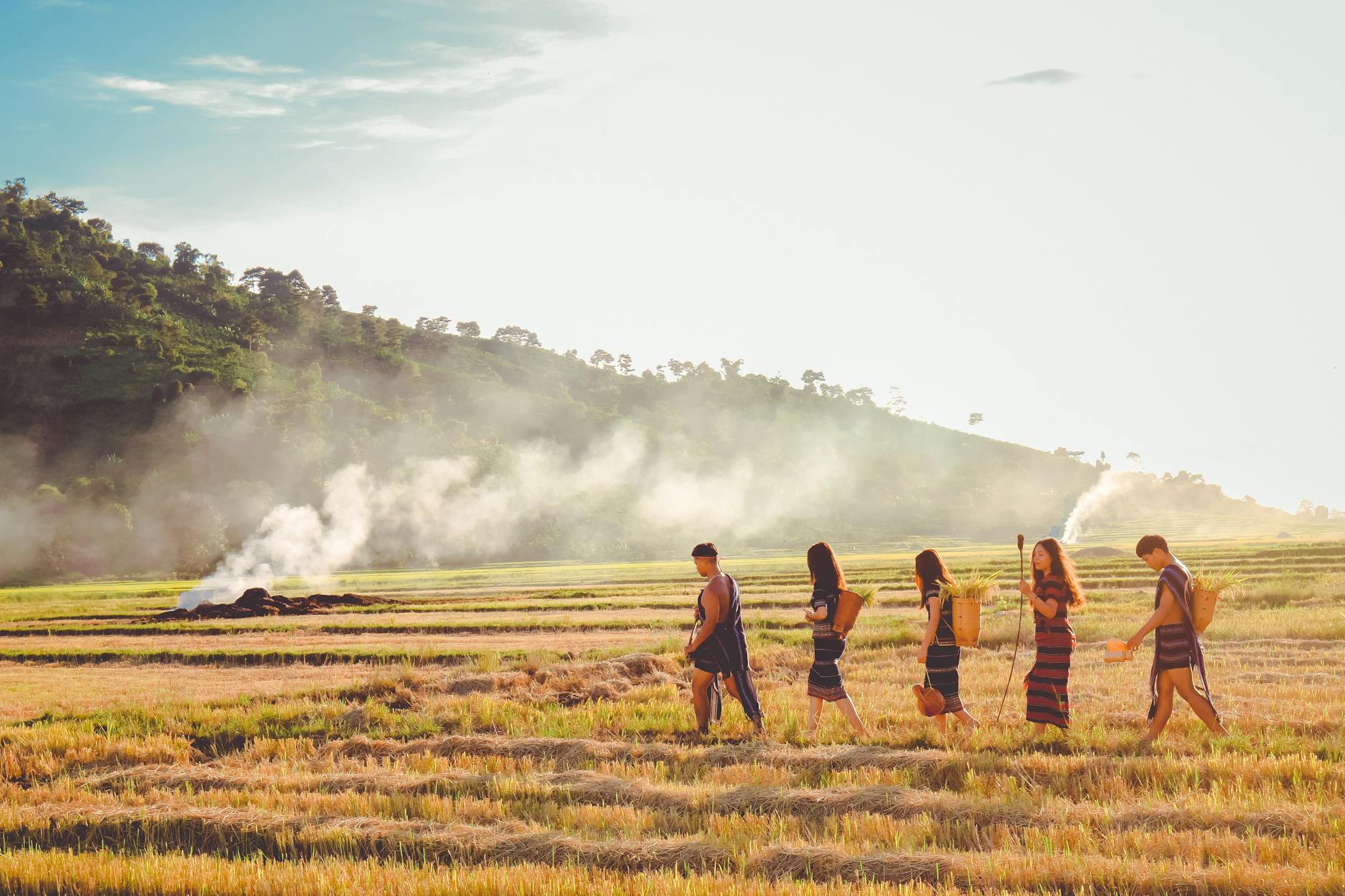
The Purple Stage (Tribal Stage) of human development is where Homo Sapiens have been for most of the 300,000 years of our existence up until maybe 15,000-5000 or so years ago (depending on when “civilization” started, that’s another debate I won’t get into at this time lest I want Graham Hancock to come after me).
Mindset: The Purple Stage can involve belief in mystical beings, rituals, along with a strong sense of community and tradition. These are all important behaviors that help reinforce group identity and loyalty. More than loyalty, members of the tribe often see the survival of their tribe as more important than their own individual survival, which is important when surviving together in difficult environments.
What’s interesting is that anthropologists speculate that the maximum number of people that can exist in a group while maintaining social relationships with one another is about 150, this is Dunbar’s number. Coincidentally, the theory of early human tribal existence is this is roughly the number of people who existed in a tribe together.
Benefits of the Purple Phase:
Given that it’s easier for 100 some people to survive in the wilderness if they work together, rather than as a bunch of cut-throat individuals, the Purple Stage has obvious benefits over the Beige Stage. The benefits of tribal thinking are loyalty to one’s group. The ability to socialize and work together as a group is probably what helped in human’s evolution as a species.
Problems of the Purple Phase:
However, the problem of tribal thinking can be a willingness to value one’s “team” or “identity” to the exclusion of all other groups.
The Purple Phase Today:
Even though I mentioned this was the stage of development for early humans, many human groups still exist in tribes today in more remote parts of the world. Rather than seeing these groups as “lesser” or “primitive,” we should just see that this is a different form of social organization than our own society. In fact, it should be acknowledged that many of these groups have strengths over our own society, such as living in harmony with nature and having strong and supportive social bonds with one another.
It should also be noted that tribal groups can exist within a larger civilization, like a Russian nesting doll. This can exist with fraternities, loyalty to a sports team, or even in politics.
3 – Red (PowerGods) Authoritarianism

The Red Stage is focused on dominance.
Mindset: It’s about power and control and thinking of oneself in a world of “haves and have nots,” obviously wanting to be in the group of “haves” to the exclusion of the “have nots.” People in this stage want to avoid shame, defend their reputations, and be respected.
In the beginning phases of human civilization, when human beings learned to work with each other in groups larger than tribes or small villages, authoritarian God-Kings/God-Queens emerged to take control of the desperate masses. These were the pharaohs, Caesars, and emperors that existed throughout most of human civilization. And the masses—rather than hating their despots—often venerated these God-Kings and Queens, seeing them as emissaries between humanity and heaven. Today in our democracies…or so called democracies…we may be conditioned to see these authoritarian societies as objectively bad all around. However, like all of the steps of Spiral Dynamics, there are pluses and minuses depending on the group’s circumstances. For instance, it is possible that when these authoritarian societies emerged, it was a result of many different tribes or villages who were tired of killing each other, and were relieved to have an authoritarian father or mother figure take control and bring order.
Indeed, when Augustus Caesar took control in Rome after centuries of civil war and kicked off the Pax Romana (100 years of peace), there were many who breathed a collective sigh of relief. Is it worth it to sacrifice freedom for safety? That’s another argument for another day.
In today’s world, authoritarian governments often emerge in war-torn areas where years of fighting have led people to desire a powerful figurehead who can restore order, and maintain peace—even if it may be through dominance and control. These authoritarians, or dictators, often use religion or cults of personality to maintain their power.
Benefits and Negatives of the Red Phase:
While there are benefits to this type of group structure (order and safety), the negative is a loss of individualism and freedom in favor of the survival of the civilization. Authoritarian civilizations also have less of a focus on human rights in favor of group survival. This is why authoritarianism becomes attractive when people are faced with war, a lack of resources, a powerful enemy, or other factors that put survival in doubt.
Today, authoritarianism still exists in several societies, in particular with dictators and fascism.
4 – Blue (TruthForce) Religious Order
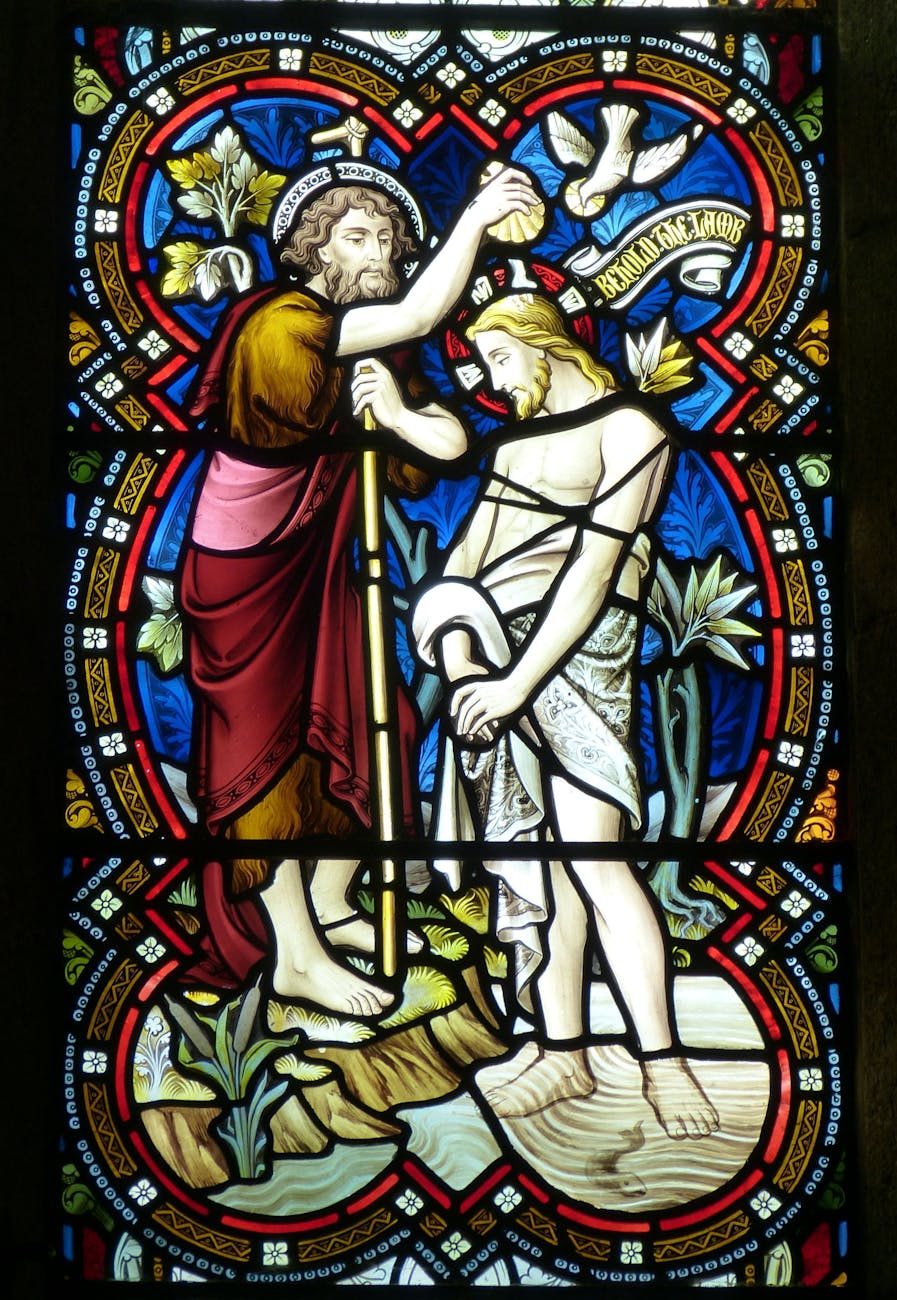
The Blue Stage is focused on order, structure, rules, and absolute truths.
Mindset: This level seeks stability and moral certainty, often represented by religious or ideological systems. People within this phase are interested in finding meaning and purpose in living. There’s an emphasis on self sacrifice in pursuit of “the way.” There’s an interest in bringing stability and order to “all things,” controlling impulses, and feelings of guilt or shame for not following the way are encouraged. There’s a focus on the “divine plan,” righteous living, and dogma.
While this stage also focuses on stability and order, much like the Red Stage, I would say a key difference is the shift toward the belief in Universal Truth. Beyond having a God-king, or a set of gods that look out for your the good of your own civilization, there’s a Universal God/Truth that applies to everyone.
My own perspective is that this phase started on a larger scale around the Axial Age, an age in human history that occurred from the 8th-3rd century BCE, in which there was a profound shift in human religious and philosophical consciousness in places such as Persia, India, China, the Levant, and the Graeco-Roman world. Confucianism, Taoism, Buddhism, Zoroastrianism, Jainism, and Rabbinic Judaism emerged during this area. In some places, there was a general shift away from polytheism toward monotheism. In other places, it wasn’t necessarily one God that was key, but more of a centralized “way,” a code of living, or a higher or objective truth.
Some of the beliefs and philosophies that emerged during the Axial Age, would later pave the way for Christianity and Islam, which would become powerful systems of thought in the Middle Ages. The Middle Ages were a time heavily characterized by the Blue Phase of existence, a time when the authority of high priests and religious scholars was key.
Why do civilizations move from the Red Phase (authoritarianism) into the Blue Phase (religious order)? While there’s no size fits all reason, historically this seemed to happen when a civilization started to have more contact and trade with other civilizations. Perhaps when there was a relative level of safety established, and survival was no longer the highest concern, these civilizations became more interested in exchanging ideas with each other, rather than just enslaving or killing each other. When there is a certain level of safety established, people have more time to philosophize and consider the higher truths of existence.
Indeed, while the Roman gods were seen primarily as the gods of the Roman people, systems such as Buddhism, Taoism, Confucianism, Platonism, Christianity, and Islam were seen as systems for everyone.
Benefits:
The benefits of the Blue Phase is that it facilitated cooperation between different civilizations if they could develop a shared religious and cultural identity. Civilizations that swore loyalty to the Catholic Church or to the Caliphate would all (in theory) protect each other. The people within these groups also developed a shared set of religious rituals that established unity, and helped them function better as a group. If a group of racially and linguistically different people were all praying, fasting, and meditating together, along with following the same familial and marriage structures, it was easier for them all to work together.
Negatives:
The negatives of the Blue Phase is that it can fall into valuing dogma over individual thought and human progress. High priests and scholars interested in enforcing their power may keep society stagnant. An example of this is when Galileo told the Catholic Church that the Earth revolved around the Sun (rather than the Sun revolving around the Earth). The Catholic Church wasn’t a big fan of this theory, and responded by sentencing Galileo to house arrest for the rest of his life.
5- Orange (StriveDrive) Competition and Achievement

Mindset: In the Orange Stage, the focus is on achievement, rationality, and competitiveness. The focus on success, science, and material progress is often reflected in entrepreneurial and capitalist societies. There’s a strong value placed on individualism, progress, and productivity for productivity’s sake.
The shift away from a Christian based society in the West to a Capitalism/Democracy happened when people became tired of religious wars and wanted to focus more on individual achievement. This historical period is generally called The Enlightenment, and started about 300 years ago, and then led to the Industrial Revolution (about 200 years ago).
What’s interesting is that other phases can still exist within this phase, such as the nesting doll example I gave above. Indeed, the religious thinking of the Blue Phase has been allowed to exist parallel to the economic development of the Orange Phase, sometimes having a sort of symbiotic relationship. And indeed Orange Phase civilizations, can also push other countries toward a Red Phrase, and put in place puppet dictators in order to control and dominate other civilizations under their influence. Or even destroy the structures within some civilizations, cause them go to back to tribal infighting, and use that infighting to exploit those groups for resources and capital.
While we mainly think of Capitalism as an Orange Phase system, I would also argue that much of the so called Communist systems in the 20th century were a sort of mix between Orange (productive) and Red (authoritarian) thinking.
Benefits:
The benefits of the Orange Phase are a massive amount of progress, technological progression, innovation, along with a focus on human rights and human liberty. Ideas of human rights have emerged during the Orange Stage. People have begun to see humanity itself as intrinsically valuable, beyond what religion, race, or culture a person may belong to. Societies with different religions and backgrounds can trade and work together in the interest of developing enterprise and capital.
Negatives:
However, the negatives of the Orange Stage is that it sees humanity as more important than the planet or the ecosystem that we live in. This leads to massive amounts of pollution, animal cruelty, and the destruction of the environment. This also leads to capital being more valuable than human beings. And in late-stage Capitalism (where we’re at now in the West), the oligarchs have destroyed the regulatory structures that once made Capitalism work. The U.S.—I would argue— has actually reverted back to the Beige Stage, with the wealthy elites who control our society being more focused more on their own survival than the survival of the planet, humanity, or even Capitalism itself—but that’s another article for another day.
6 – Green (HumanBond) Environmentalism and Humanism

Mindset: The Green Stage emphasizes equality, community, environmentalism, localism, and concern for others. It is often associated with progressive and humanistic values.
Some societies are closer to this than others. In particular, this would be societies focused on developing renewable energy and ecological conservation.
An interesting example of this was in 2009, when the Bolivian minister Evo Morales enshrined the rights of Mother Nature into the Bolivian legal system, stating the following rights for nature: “the right to life and to exist, the right to continue vital cycles and processes free from human alteration, the right to pure water and clean air, the right to balance, the right not to be polluted, and the right to not have cellular structure modified or genetically altered.”
In our time, many of the top scientists and intellectuals are arguing for a need for humanity to evolve past its focus on the human race, and to develop an understanding of the importance of all life forms on the planet. Afterall, how can we as a species survive if we destroy the ecosystem that we depend upon for our very survival?
Thus, this stage is evident in environmental movements, ideas promoted by the Green Party, and the commitments that several countries have made around the globe to becoming Carbon Neutral. However, I would argue no civilization is currently doing enough to reduce humanity’s impact on the planet. Much more needs to be done on this front.
7 – Yellow (FlexFlow): Integrative and Systems Thinking

Mindset: At the Yellow Stage, individuals begin to understand the complexity of systems and adopt a flexible, dynamic approach to life.
This kind of thinking requires a level of progression and humility that enables humanity to see that one size does not fit all. Indeed, I’ve already demonstrated how phases can exist inside and even co-exist with other phases. For example, stating that Western style Capitalist Democracy is the one and only system for the whole planet portrays a certain Western style racism and elitism that lacks humility and nuance about other systems of life.
I would say currently, China is a country that has demonstrated Systems Thinking better than its competitors, which is probably why they are achieving record progress right now, and why the 21st century is shaping up to be the Chinese Century. The Chinese government acknowledges that there are some areas where Capitalism works better, some areas where Communism works better, and other areas where Authoritarianism works better. They are also making moves toward renewable energy and Green Phase ideas. However, in this front, they still have a long way to go, given their massive amount of carbon output and pollution in order to obtain the rapid progress that they have achieved in the last 20 years.
8 – Turquoise (GlobalView): Holistic, Global Awareness, Interconnectedness

Mindset: The Turquoise Stage involves deep spirituality and a shared collective consciousness. This is a potential future phase where (hopefully) human beings will see themselves connected to each other and all life forms on a metaphysical level.
Theoretically, this could emerge as a kind of technogaianism, where technology enables us to share consciousness with each other and empathy with other lifeforms. Perhaps through neuralinking our consciousness to one another, perhaps enhancing our brains through genetics and AI, or perhaps in developing technology that allows us to live seemlessly with the natural world?
While human civilizations are certainly far from this, I think interconnectedness is the kind of thinking you can see in advanced spiritual practices, such as Sufi Mysticism, Buddhism, or in Hinduism with the idea of the individual soul connecting to a super soul (the Paramatman) that represents the “Primordial Self” or the “Self Beyond” who is spiritually identical with the absolute and ultimate reality.
In the 10th century, there was a Sufi dervish who proclaimed, “Ana ‘l-Ḥaqq,” I am the truth, or I am God. He was thusly executed for heresy. However, there are those that speculate that he wasn’t actually calling himself God, but that he had achieved a level of spiritual evolution so advanced, that he no longer saw himself as separate from his Creator (Poor guy had a Tourquoise Phase mindset in a Blue Phase society). In many spiritual traditions, there is an attempt to evolve beyond the limitations of the self (or the ego), to become one with the Superego. This doesn’t mean seeing ourselves as gods—far from it. This actually means humbling ourselves to see ourselves as small interlocking piece of a larger structure, and wanting to be one with the purpose of a Higher Truth. (Like legos!)
9 – Coral Phase???

In some interpretations of Spiral Dynamics, a ninth stage called Coral is mentioned. However, it’s still a relatively speculative and less well-defined stage compared to the previous stages. It’s thought to represent an even more advanced level of consciousness, with a focus on synthesizing the lessons from previous stages in a way that integrates both individual and collective needs.
However, I suppose we’re not advanced enough to understand that yet. Maybe there’s some aliens that are and they’ll come and enlighten me? But that’s a topic for another day.
If you enjoyed this article, check out Are We At the End of History, Or the Beginning of a New Chapter?
 Green Medina
Leave a comment